You sat in a classroom for over 16 years. Primary school, secondary school, maybe university on top. You learned the mitochondria is the powerhouse of the cell. You memorised the tributaries of the River Niger. You can still recite quadratic equations if somebody pushes you.
But nobody ever pulled you aside and said, “This is how money actually works.”
That’s the quiet scandal of Nigerian education. School fees paid in full, WAEC written, NYSC done — and you still walked into adulthood not knowing the difference between an asset and a liability. You’re not slow. You were just never taught. Fewer than a third of Nigerian adults are financially literate — the 2023 Central Bank of Nigeria survey put the figure at around 26%. Think about that. Most of us are figuring out money by trial, error, and sapa.
So let’s fix a little of that today. Here’s what wealthy Nigerians understand about money — the stuff that never made it onto any syllabus.
First lesson: assets put money in your pocket, liabilities take it out
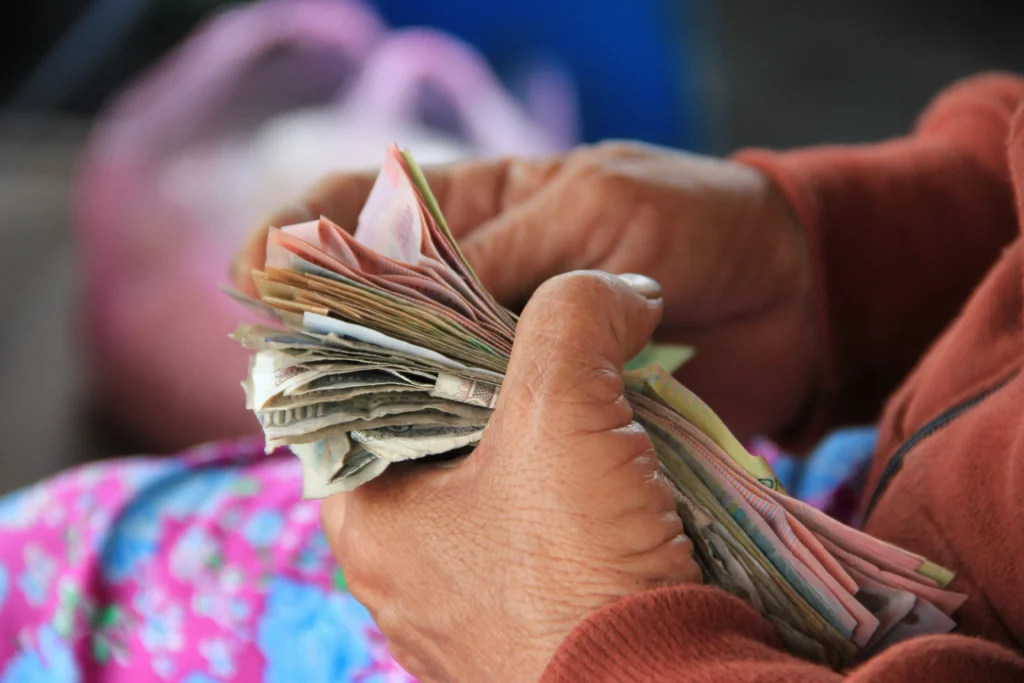
Photo by Niels Steeman on Unsplash
This is the one they should’ve taught in JSS1.
An asset is something that pays you. A liability is something that costs you. Simple. The problem is most of us spend our first salaries buying liabilities and calling them investments.
The latest iPhone on installment? Liability. The “clean” second-hand car that drinks fuel and needs a mechanic every month? Liability. The aso-ebi for three weddings this month? You already know.
Now look at how the rich move. Aliko Dangote doesn’t spend his money on things that lose value. In a 2014 interview with Al Jazeera, he put it plainly: “We don’t keep any money in the bank; whatever we have we fully invest and we keep on investing.” His wealth lives inside things that produce more money — cement plants, sugar refineries, factories that work while he sleeps. That’s the whole game.
You don’t need a refinery. But you can own small things that pay you — a mutual fund, treasury bills, shares. Start seeing your money as workers you send out to bring back more money. Most people spend their salary. Rich people buy assets with theirs, then spend what the assets produce.
Ownership beats salary. Almost every time.

Phot by Ben Iwara on Unsplash
Here’s something nobody tells you at your first job: a salary can feed you, but ownership is what actually builds wealth.
Tony Elumelu understood this early. Back in 1997, he and some partners put around $5 million into a small, struggling bank. He renamed it Standard Trust Bank, turned it around, and in 2005 merged it with UBA — building a bank that now operates in about 20 African countries. He wasn’t just an employee collecting a fat cheque. He owned a piece of the thing. When it grew, he grew.
Femi Otedola tells a similar story. He built and sold, built and sold. In 2019 he let go of Forte Oil, then moved into power. On 29 December 2025 he sold his roughly 77% controlling stake in Geregu Power to MA’AM Energy Limited in a deal valued at $750 million (about ₦1.088 trillion), according to Premium Times and Vanguard — because he owned the company, not just a seat in it. Interesting detail: Otedola never even finished university. His classroom was the real world.
Even Folorunso Alakija — one of the richest women in Nigeria — started as a secretary. A secretary. She moved into fashion, then took a bold step into oil and gas with Famfa Oil, which holds a stake in the Agbami oilfield. Ownership changed everything for her.
The lesson isn’t “quit your job.” Please don’t. Your salary is your first tool. But while you’re earning, use part of it to own something — shares, a small side business, units in a fund. Let a little of your money graduate from working for others to working for you.
Money moves quietly — and it likes company
Photo by Towfiqu barbhuiya on Unsplash
There’s a loud money culture in Nigeria right now. Detty December flexing, soft-life content, the pressure to “package.” Whole festivals built around spending, and everybody performing wealth online.
But real money is usually shy.
Notice how the actual billionaires aren’t the loudest people in the club. Mike Adenuga, who built Globacom and Conoil, is famously private — you barely hear from the man. Dangote reinvests instead of showing off. The people spraying the most money at the owambe are rarely the richest people in the room. Afriklens
And here’s the other secret: rich people don’t rely on one income. They stack several. Dangote once described how he kept “moving up the food chain” — from trading, into manufacturing, into packaging, into more. Different streams feeding the same pot.
You can start smaller than you think:
- Your 9-to-5 salary (stream one)
- A weekend skill — baking, design, tutoring, braiding, writing (stream two)
- Money that earns interest while you sleep, like a money market fund (stream three)
When your salary finishes by the 12th of the month — and be honest, sometimes it does — a second and third stream is what carries you to the 30th without borrowing.
The naira problem: think in value, not just cash
This one is important, so lean in.
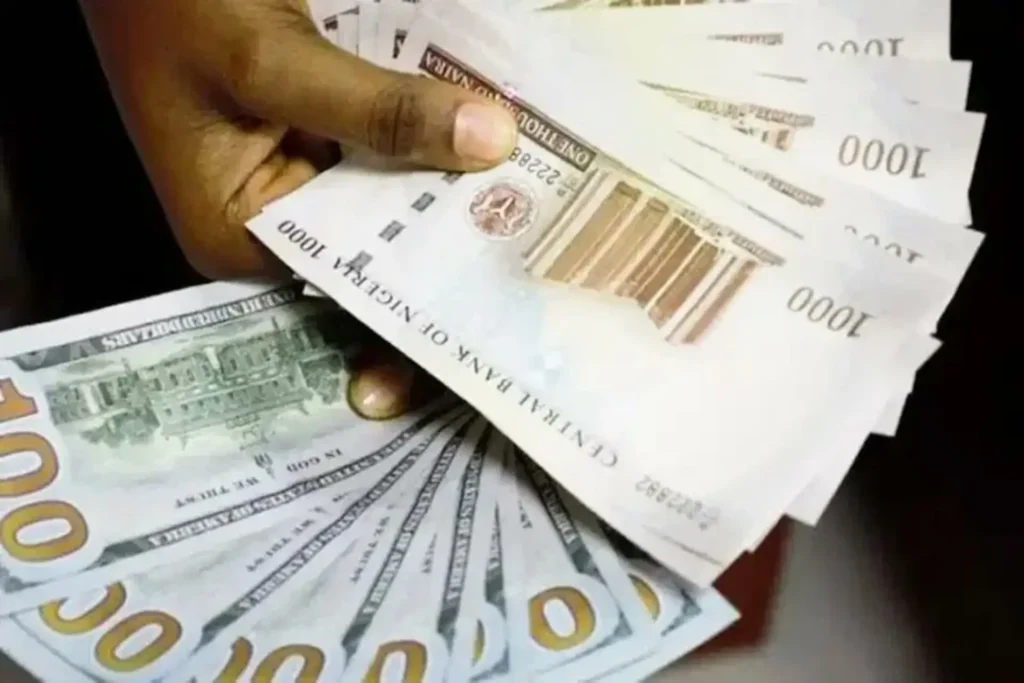
Keeping all your money as idle cash in Nigeria is like holding ice in the afternoon sun. It melts. Slowly, then all at once.
Look at what’s happened to the naira. In 2015, a dollar cost you under ₦200. After the exchange rate was floated in June 2023, it slid past ₦460, then ₦750, and by early 2024 it had crossed ₦1,500. Through 2025 into 2026 it settled somewhere around ₦1,350–₦1,430. Add inflation on top — Nigeria’s headline inflation was 15.38% in March 2026, still around 15.9% by mid-year according to the National Bureau of Statistics — and you see the problem. The ₦100,000 you’re proudly saving under your mattress buys less every single month.
The rich don’t let cash sit still. They convert it into things that hold or grow their value — assets, dollar-based investments, businesses.
You can do a smaller version of the same move:
- Money market funds — these pool your money into safe, short-term government and corporate instruments. Nigerian outlets like Nairacompare and First Asset Management reported these funds returning roughly 15–22% a year through 2025 and into 2026, which recently stayed ahead of inflation. Returns move with interest rates, though, so they can fall.
- Treasury bills — you’re basically lending to the government for 91, 182, or 364 days. About as safe as it gets in Nigeria.
- Dollar assets — apps like Risevest let you hold investments in dollars, which softens the blow when the naira slides.
None of these make you rich overnight, and none are guaranteed — your returns depend on the market and the timing. But they beat watching your money quietly lose value while you do nothing.
Relationships and rooms are a kind of currency

Photo by Getty Images on Unsplash
Nobody grades you on this in school, but who you know shapes what you can do.
Tony Elumelu didn’t stop at building his own wealth. Since 2015, his Tony Elumelu Foundation has disbursed over $100 million in $5,000 non-refundable seed grants — plus training and mentorship — to more than 24,000 entrepreneurs across all 54 African countries, according to its own reporting. Why? Because he knows talent is everywhere but access to the right room is not.
The rooms you enter matter. The WhatsApp group where a real business tip drops. The mentor who tells you which investment app is actually SEC-registered and which is a Ponzi wearing a nice logo. The friend who says “come, let’s do this contract together.”
You build these rooms on purpose. Show up. Be useful. Ask better questions. Stop hiding your goals from people who could help. In Nigeria, being broke is expensive partly because being alone is expensive — nobody to call when things go rough. Your network is quietly part of your net worth.
Start small. Start now. That’s the whole trick.

Photo by JEaLiFe Pictures on Unsplash
Here’s the part I really want you to hear.
You don’t need millions to begin. That myth keeps too many smart people stuck, waiting for a “better time” that never comes.
Dangote didn’t start with billions. As a boy he sold sweets to his classmates for a small profit. When he began his business properly in 1977, it was with a ₦500,000 loan (about $3,000 at the time) from his uncle Sanusi Dantata — money he used to import rice and sugar. He started small and stayed consistent for decades. In his own words, “to build a successful business, you must start small and dream big.”
The tools available to you right now are honestly better than what your parents had. With some Nigerian investment apps, you can start with tiny amounts — Cowrywise lets you begin from as little as ₦100, and PiggyVest‘s investment feature from around ₦5,000. These platforms are regulated by the SEC. And if you’re in the diaspora, you’ve got even more options for dollar and naira investing from wherever you are — Nigerians abroad sent home a record $20.93 billion in official remittances in 2024, per the Central Bank of Nigeria, so plenty of that money could be growing too, not just spending.
Beginner or not, it doesn’t matter. What matters is starting. ₦5,000 today. Then ₦5,000 next month. Then a little more. Boring, steady, quiet — exactly how real money is built.
Black tax is real. Sapa is real. Nobody’s pretending it’s easy on a Nigerian salary. But the difference between the people who eventually breathe easy and the people who struggle forever often comes down to one habit: buying assets, quietly and consistently, starting from small.
School skipped these lessons. That’s not your fault. What you do with them now — that part is on you.
If this opened your eyes even small, follow TrendzCapital for more money lessons made simple for Nigerians at home and abroad. No big grammar, no shame, no gatekeeping — just the financial education school forgot to give you. We break it down every week. Come grow with us.
It Can Grow 🌱 — Fortune, TrendzCapital.
A quick note on the numbers: figures like investment returns, exchange rates and inflation reflect 2025–2026 reporting from named sources (CBN, NBS, Nairacompare, First Asset Management, Premium Times, Vanguard, Al Jazeera) and will change over time. Nothing here is a promise of profit — investing carries risk and individual results vary. Always confirm that any platform is SEC-registered before you put money in, and treat this as education, not personalised financial advice.